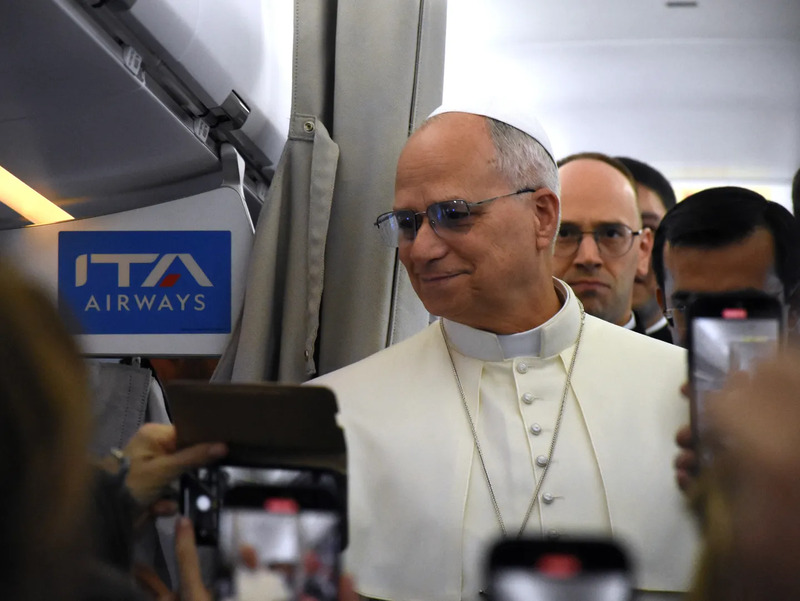
Pope Leo has embarked on his first foreign trip, with a focus on the theme of “building bridges,” a message that has been central to his papacy since his election in May. While the late Pope Francis had initially planned these visits, Pope Leo has fully embraced this unifying vision, which aims to foster greater cooperation and healing among different faiths.
In his first six months as pope, Leo has developed an image of being thoughtful and cautious. However, this trip will put his diplomatic skills to the test as he engages with leaders and communities across the region.
A key moment of the trip will take place in Iznik, Turkey, the site of the ancient city of Nicaea. Here, Pope Leo will join leaders from various Christian denominations to commemorate the 1,700th anniversary of the Council of Nicaea. In 325 AD, more than 200 bishops gathered at the council to make key decisions, including affirming the divinity of Jesus Christ, which led to the creation of the Nicene Creed. Although Eastern and Western Christianity later experienced a significant split, this gathering will focus on unity and the healing of historical divisions.
During his time in Turkey, Pope Leo will also visit the Blue Mosque, a site visited by his predecessors, Pope Francis and Pope Benedict XVI. He will engage in interfaith dialogue with religious leaders, emphasizing cooperation and mutual understanding before continuing on to the second leg of his journey.
Despite recent tensions in the region, the Vatican has confirmed that plans for the Pope’s visit to Lebanon remain unchanged. Pope Leo will meet with religious leaders and young people, offering support and encouragement to Lebanon’s Christian population, which makes up about one-third of the country’s population.
On the final day of his trip, Pope Leo will celebrate Mass at the Beirut waterfront, the site of the tragic 2020 port explosion. He will offer prayers for the more than 200 people who lost their lives and for the thousands who were injured in the disaster.
In recent months, Pope Leo has spoken out on issues such as the dignity of migrants but has avoided taking an overtly political stance. His balanced approach has allowed him to appeal to both progressive and traditionalist factions within the Church, which is thought to have contributed to his broad support during the conclave.
Pope Leo’s approach to leadership contrasts with that of his predecessor, Pope Francis, who was known for his visionary leadership but also for creating divisions within the Church. Pope Leo, by contrast, has sought to maintain a careful balance, upholding some of Pope Francis’s progressive ideals while also considering the concerns of more traditionalists.
Throughout his papacy, Pope Leo has consistently advocated for peace and an end to war, although his approach differs from that of Pope Francis, who made regular calls of support to the Holy Family Church in Gaza during the conflict. During his trip, Pope Leo is expected to address the ongoing conflicts in the region, especially during meetings with Turkish President Recep Tayyip Erdogan and Lebanese civic leaders.
At the conclusion of the trip, Pope Leo is likely to share his reflections during a press conference on the flight back to Rome. And for a unique twist, the Pope will speak in English throughout the Turkish portion of the journey and in French during his time in Lebanon. While Pope Leo is fluent in several languages, including Italian, the Vatican has confirmed he will deliver public addresses in English for the first time during this trip, marking a personal and linguistic milestone.
About the Author
