If being shocked by the outcome of an NCAA tournament game is what gets you out of bed in the morning, last March turned into a deep sleep.
The first round saw just seven upsets, and a few of them barely qualified as upsets. For the first time since 2017, no teams seeded No. 13, 14, 15 or 16 won a first-round game. The only double-digit seed to advance to the second week was Arkansas, an underachieving regular season team with one of the most expensive rosters in college basketball — hardly the mid-major Cinderella many of us crave.
And by the time the Final Four came around, the bracket was as chalky as it gets, with all No. 1 seeds advancing for just the second time in tournament history.
[Enter Yahoo Fantasy Bracket Mayhem now for your shot at $50K]
After that kind of tournament, where each of the Sweet 16 teams came from a power conference, it was natural to wonder whether mid-majors are on the verge of extinction in this event. Between the Frankenstein mega-conferences that resulted from the last round of realignment to the huge financial disparities that incentivize top mid-major players to transfer up to the power leagues, it’s fair to wonder whether last year’s tournament is about to become the norm.
I’m not so sure. Neither is Tennessee State’s Nolan Smith, a 37-year-old, first-time head coach who lived most of his basketball life among heavyweights like Duke, Louisville and Memphis but now finds himself leading a No. 15 seed out of the Ohio Valley Conference against No. 2 seed Iowa State.
“I think what you’re up against is just some very expensive rosters and some very cheap rosters, right?” Smith told Yahoo Sports in a phone interview this weekend. “But when they get between them lines, those very expensive rosters have to wake up and play the game. And they’re waking up with some fat pockets. So you might catch them on a day where they’re feeling real soft. I think no matter what, you’ve got to play the game.”
Even in an era of head-spinning, systemic change in college sports, Smith’s belief in the enduring, equalizing ability of the bracket mirrors my assumption about the NCAA tournament. As long as the mid- and low-majors are allowed to play and the games are 40 minutes long with a scoreboard that starts at 0-0, there will not be a significant difference in the number of upsets over time.
And the reason is simple: The NCAA tournament chaos has never followed a formula or made much sense on a spreadsheet. Why would it start now?
Yes, the sport has changed significantly over the past few years. There are fewer mid-major programs that can keep their cores together for multiple seasons and build an experience advantage over the one-and-done factories. Any freshman or sophomore that shows a hint of promise at the lower levels will get identified and poached by the big-spending programs in the SEC, ACC, Big Ten, Big East or Big 12.
If you go back and look at some of the great mid-major juggernauts, like the Wichita State run from 2013-17 or Loyola Chicago from 2018-21, it would be almost impossible to replicate in this environment. You’re simply not getting players like Fred VanVleet or Cameron Krutwig, who would be worth millions of dollars to a power conference program, to stay four years in the Missouri Valley Conference.
But the NCAA tournament is still an event defined by variance. In a single-elimination tournament, a 40-minute basketball game played on a neutral court with unfamiliar refs brings a level of discomfort and pressure that 18-to-22-year-olds often don’t handle well no matter how much they’re being paid. And sometimes, teams with nothing to lose can get on that stage and start making low-percentage shots by the bundle.
That’s how the tournament has always been and how it will hopefully always be. Whatever must transpire for a mega-upset doesn’t need to be sustainable or even explainable. It just has to happen once to shock the world.
Perhaps that’s being naive to the new reality of college sports, but I need to see a lot more than one year like 2025 to believe the era of March upsets is now just one more thing conference commissioners and NCAA officials have ruined.
After all, it was only two years ago that we had a 14 seed (Oakland) over a 3 seed (Kentucky), a 13 (Yale) over a 4 (Auburn), a pair of 12-seeds winning first-round games and an out-of-nowhere 11 seed in NC State crash the Final Four. And only one year before that, we had a first round with No. 1 seed Purdue and No. 2 seed Arizona both choking against mid-majors they had no business losing to.
That’s the thing about true NCAA tournament upsets: They don’t make sense in the first place.
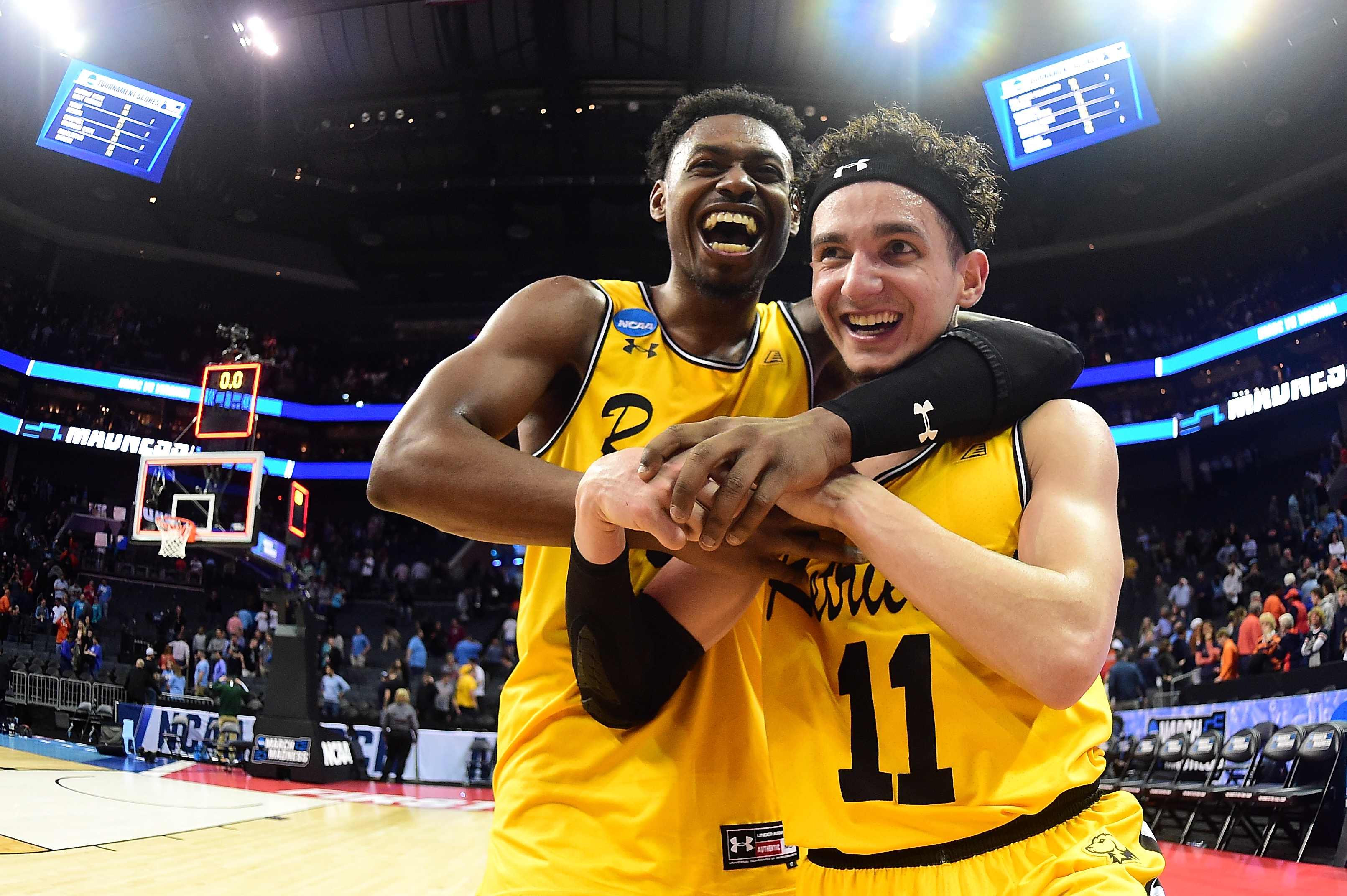
The UMBC team that became the first No. 16 to knock off a No. 1 seed in 2018? It finished second by three games in its conference and lost by 25 and 21 points in its only two games that season against power conference opponents.
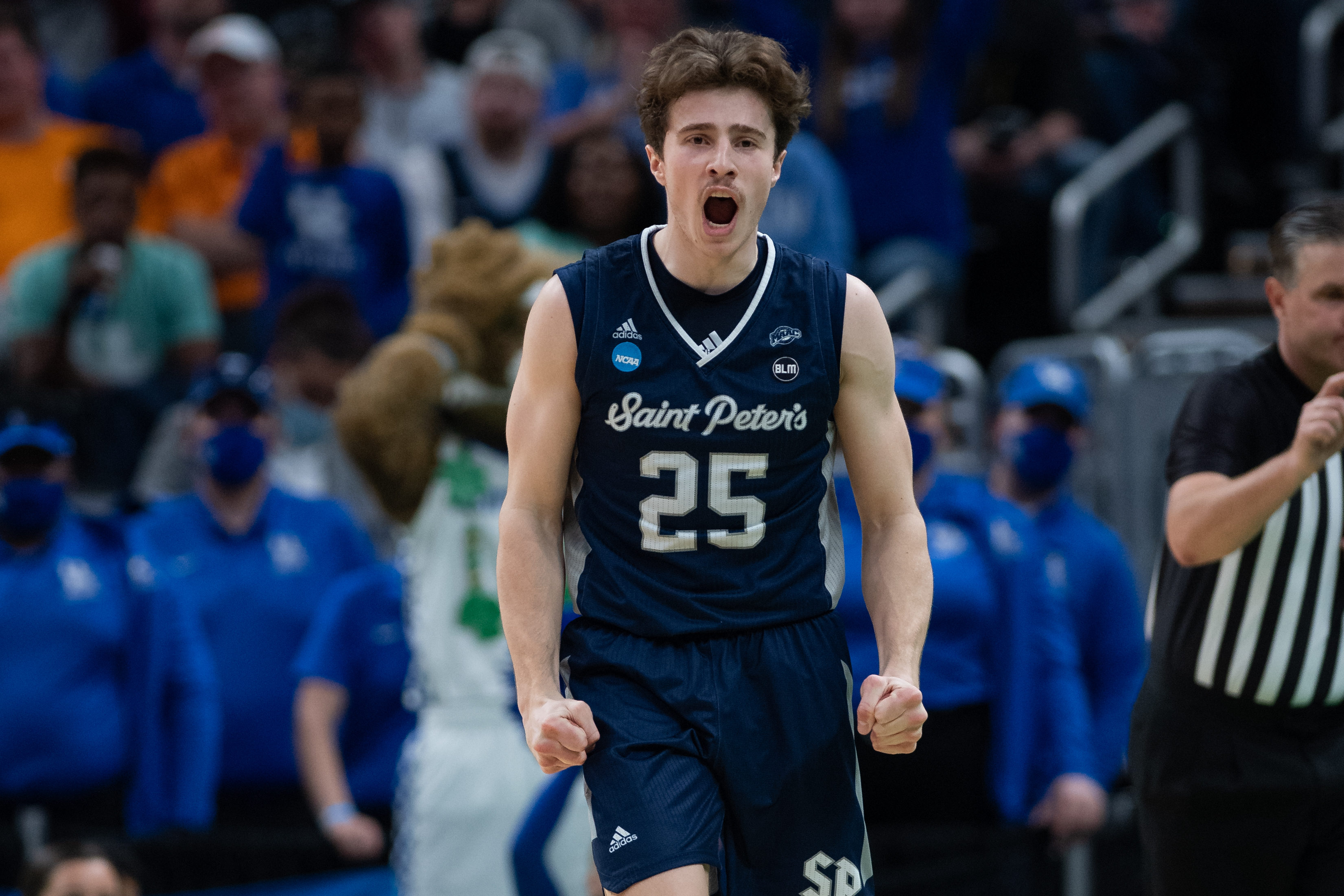
The Saint Peter’s team in 2022 that went from No. 15 seed to Elite Eight? It lost 11 times in the regular season and had done absolutely nothing to suggest it could beat teams like Kentucky and Purdue.
Or how about the Oral Roberts team that upset Ohio State and Florida in 2021 and was within a whisker of beating Arkansas in the Sweet 16? It finished fourth in the Summit League and eked out a couple conference tournament wins by a combined five points to steal the automatic bid.
By any possible metric, these were not considered teams that should have been able to compete with power conference opponents. Yet the specific nature of the tournament, where one player getting hot for one day can completely change the dynamic of a 40-minute basketball game, has allowed the near-impossible to happen over and over again throughout the history of March.
Even with the huge amounts of NIL being paid by the big boys and the annual gutting of mid-major rosters, that part doesn’t seem likely to ever change.
“The money gap in mid-major and high-major is extremely different,” Smith said. “But like I told my guys all week long, we go into the tournament to be us, no matter who we play against or how much money they’ve got.
“Honestly, we’re not even talking about upsets or Cinderella stories or anything like that. What I talk to my guys about is just being us, being champions, being the confident team that we are and getting ready to go play basketball the way we’ve been playing it all season long. At the end of the day, the game of basketball is the game of basketball. They gonna wake up just like we wake up. It’s man vs. man. Nobody’s invincible and nobody’s unbeatable.”
Maybe that assumption will turn out to be wrong. Maybe the injection of big money into rosters at the top level will turn the men’s tournament into something more akin to the women’s event where there’s historically been a huge separation between the top layer of teams and everyone else, resulting in precious few early round upsets.
But here’s to hoping last year’s tournament was more like 2017, when the only first-round upsets were a No. 10 seed, three No. 11 seeds and a No. 12 seed, with only one double-digit seed making the second weekend. Because the next year reverted to the mean with two No. 9 seeds reaching the Elite Eight, two No. 11 seeds making the second weekend and half of the No. 1 and No. 2 seeds wiped out by the second round.
It was as if the universe corrected itself in real time, preserving the unique nature of arguably the best event in sports.
My guess is it will happen again — starting this week.
About the Author
